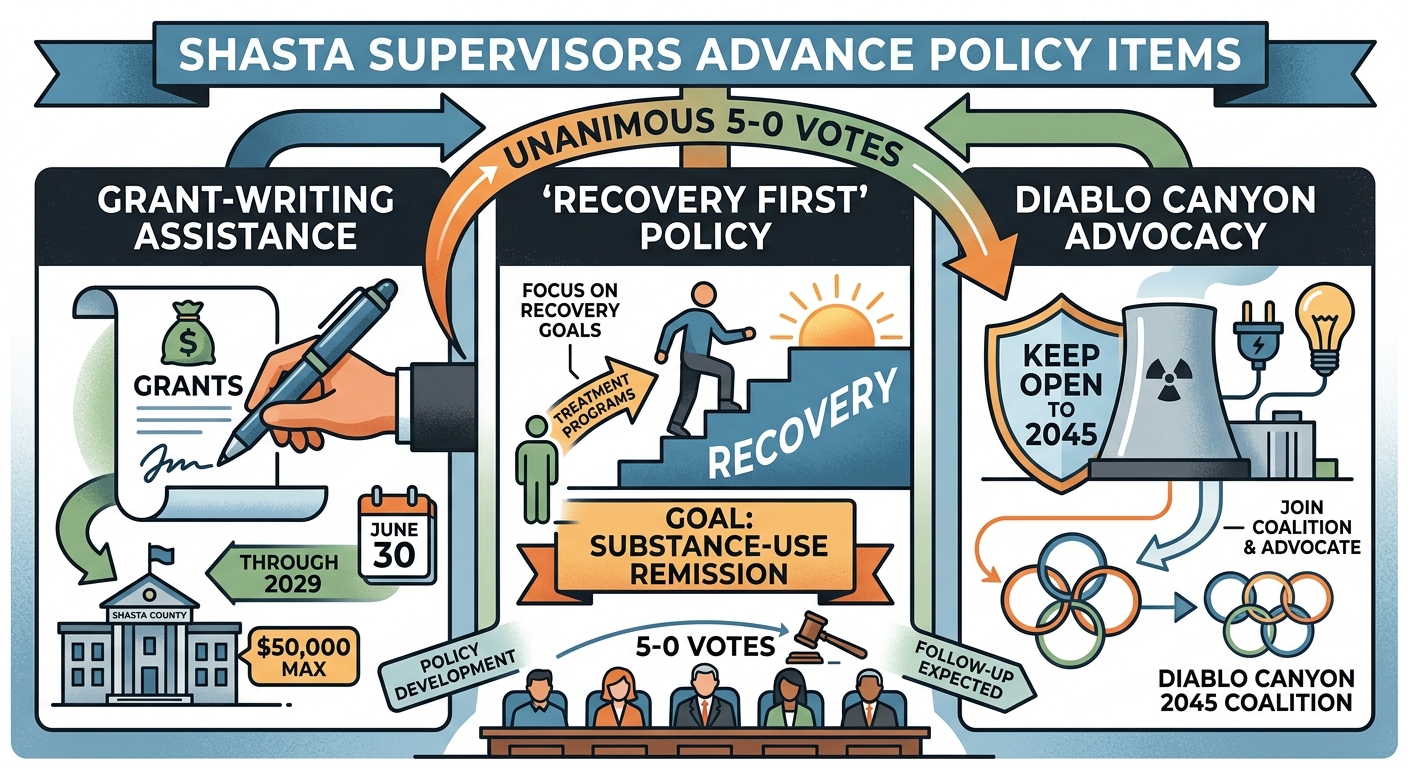
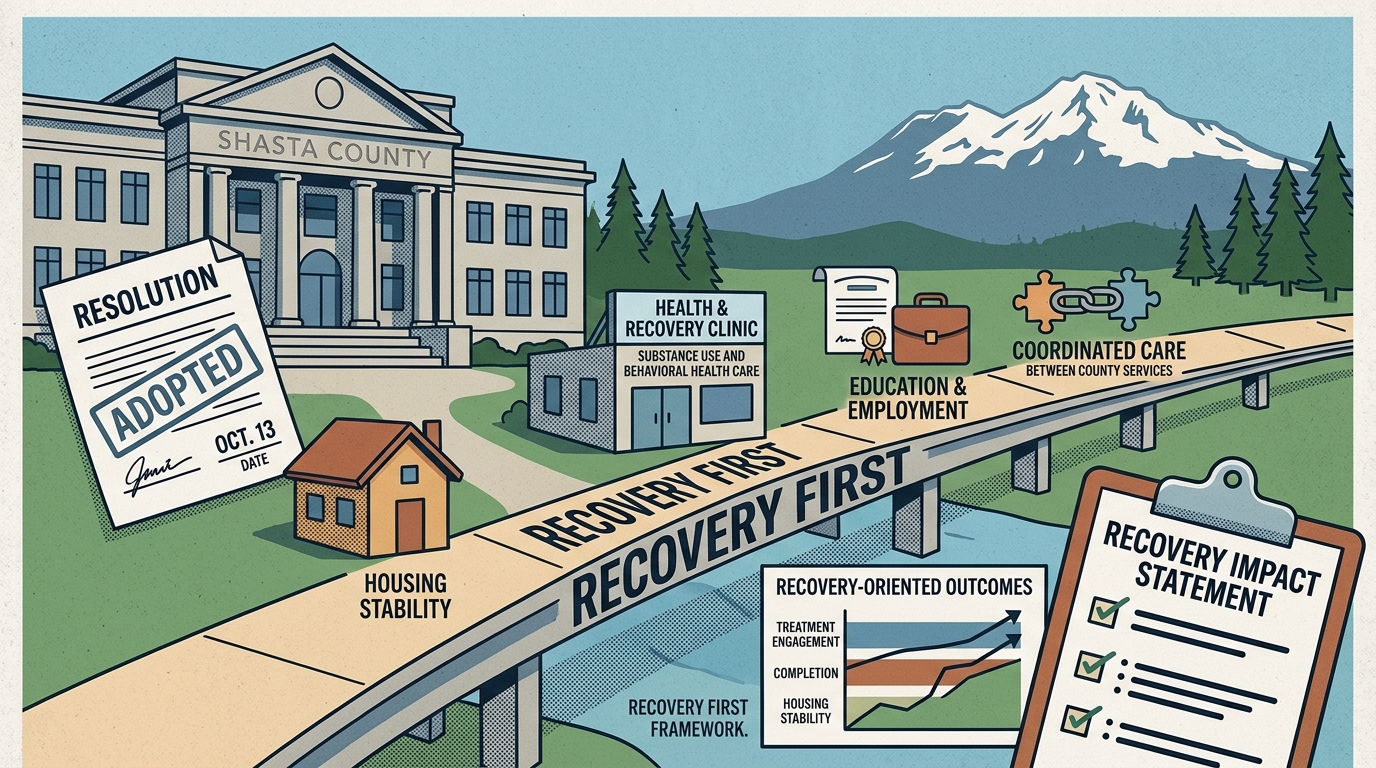
The Shasta County Board of Supervisors adopted a Recovery First resolution Oct. 13 that makes long-term recovery the guiding objective for county-funded programs addressing substance use disorder, behavioral health, public health and homelessness.
The resolution says covered programs should, when clinically appropriate, encourage recovery-oriented care and treatment, promote sustained recovery, connect people with recovery-support services, support stable housing, encourage employment and education, coordinate care among county departments and community partners, and measure recovery-oriented outcomes in addition to service utilization.
The framework also requires a Recovery Impact Statement in staff reports seeking board approval for new or materially modified county-funded behavioral-health, public-health, homelessness or substance-use programs. The statement must explain how the proposal advances or aligns with the resolution, identify any requested exception and describe anticipated recovery-oriented outcomes.
Under the resolution, a new program or material modification that the administering department determines is materially inconsistent with Recovery First must receive board approval at a noticed public meeting before implementation. The accompanying staff report must describe the program, identify the provisions it does not meet, explain the exception, list any legal, licensing, grant, Medi-Cal or contractual requirement involved, and outline alternatives and fiscal and operational impacts.
The resolution says it does not prohibit individualized treatment decisions by qualified medical or behavioral-health professionals and does not require the county or a contractor to violate a law, court order, licensing requirement, Medi-Cal requirement, grant condition or other legally binding obligation. It identifies treatment engagement, treatment completion and housing stability as recovery-oriented measures to be considered over time.
The resolution document does not include a completed vote tally. Its practical effect on existing programs, contracts and funding streams was not specified in the material reviewed.