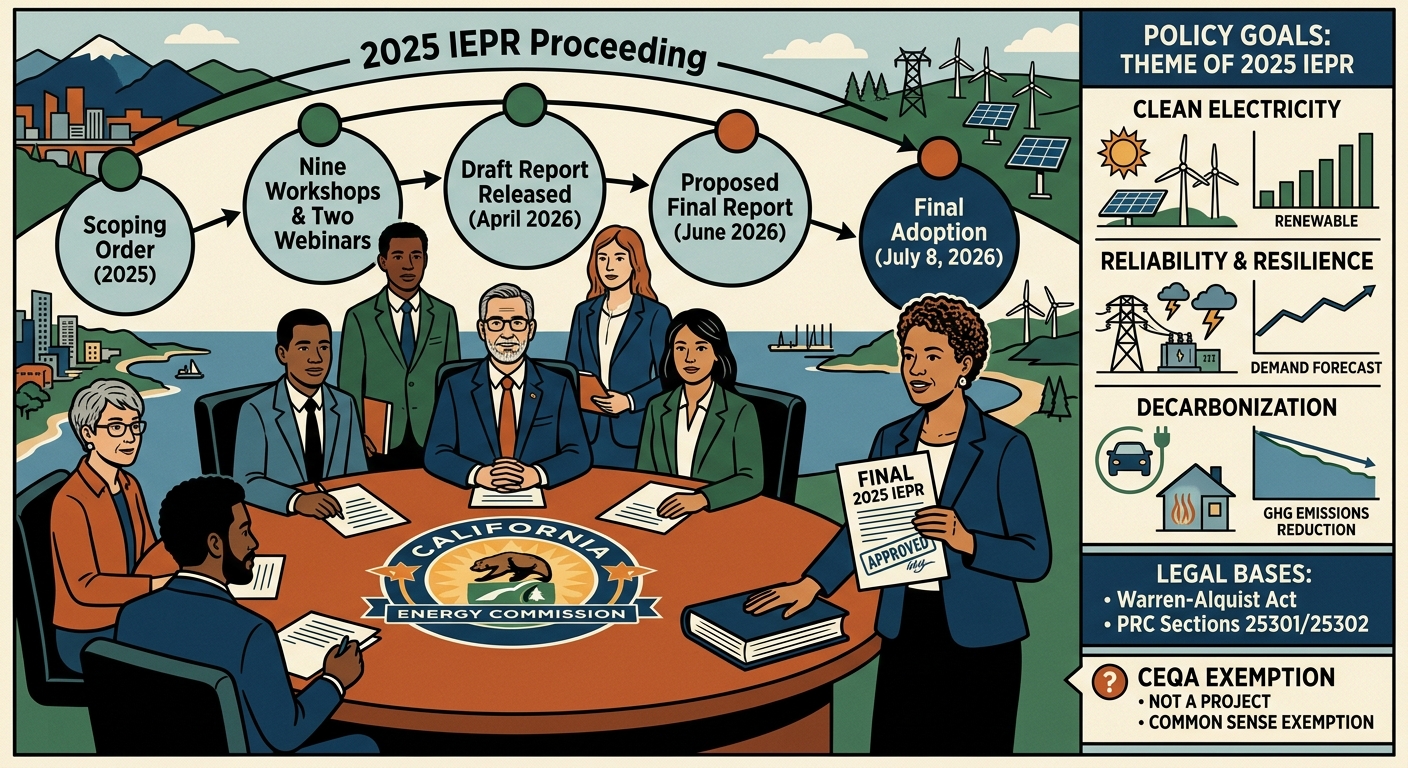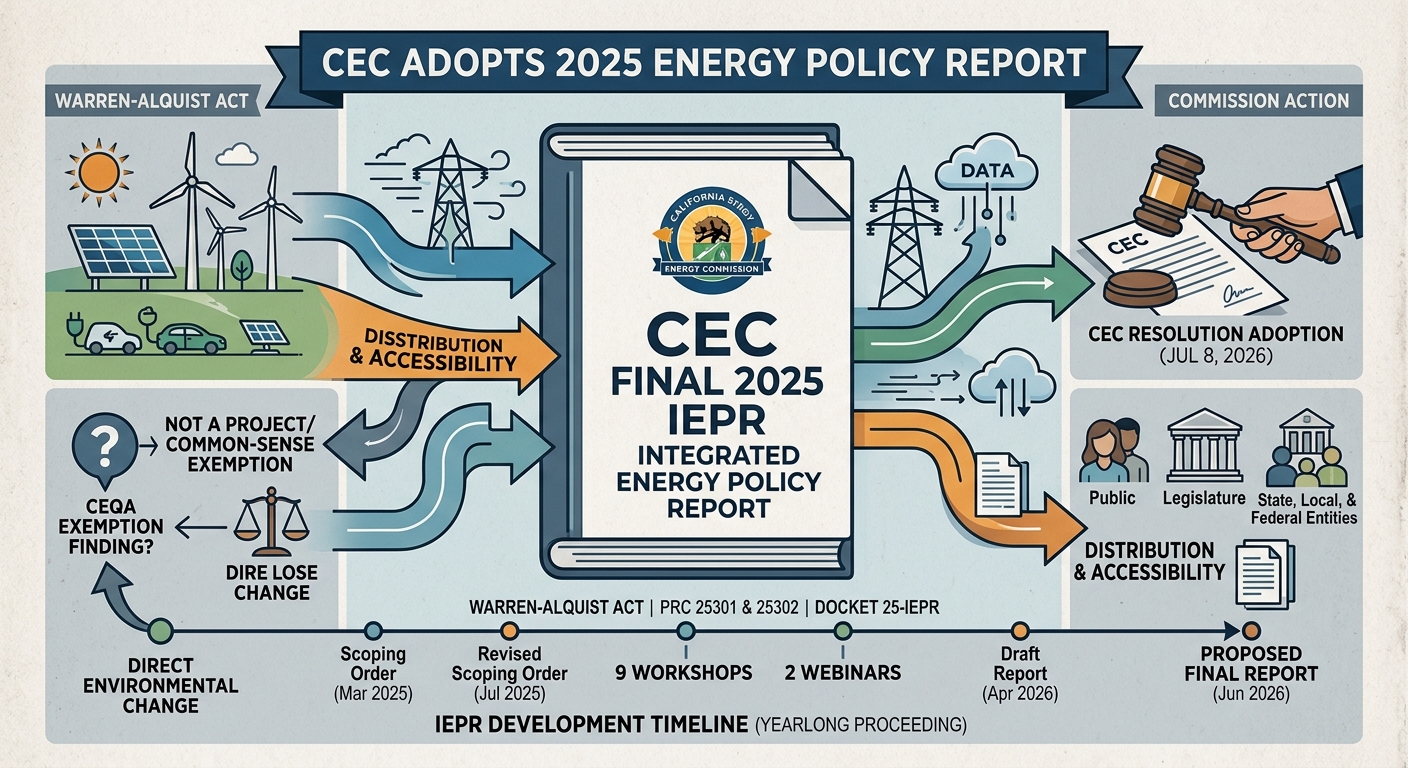
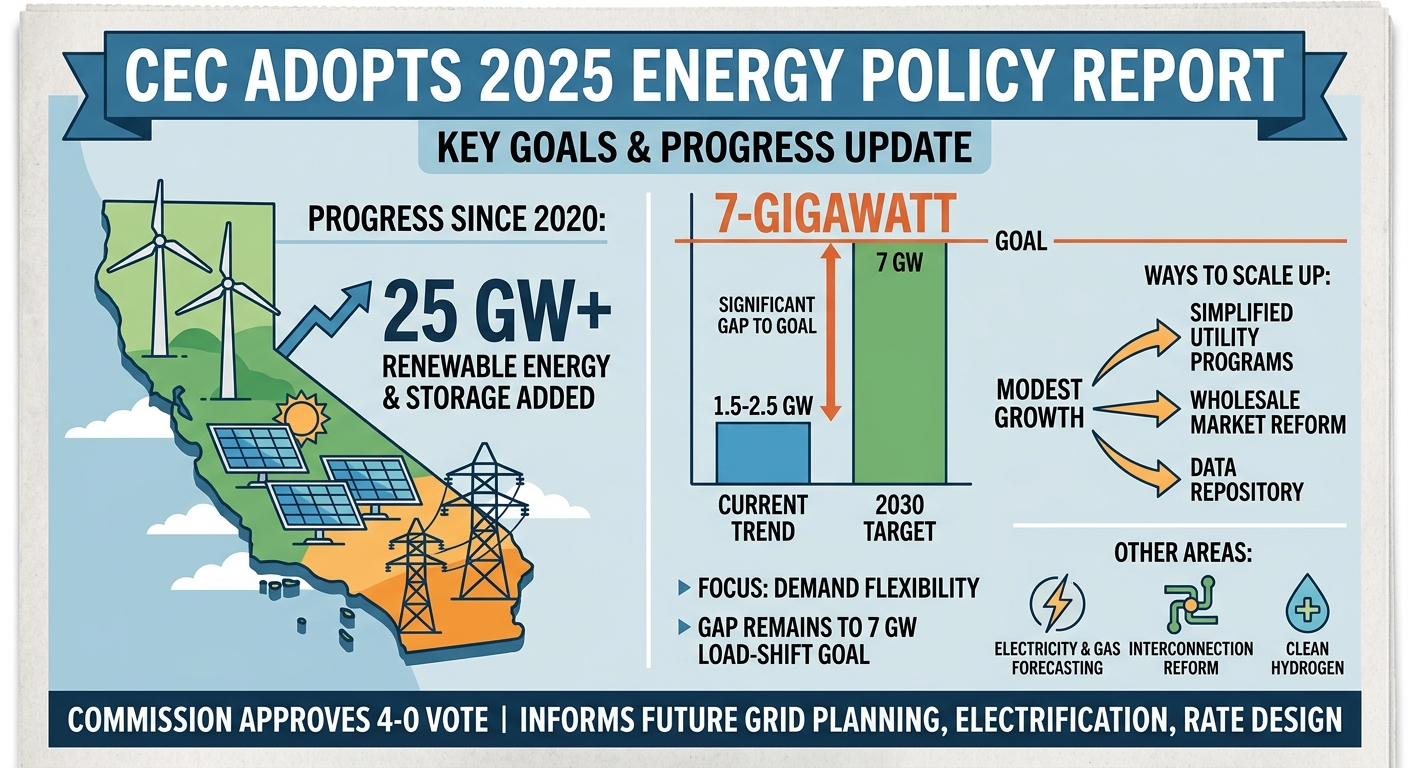
The California Energy Commission adopted its 2025 Integrated Energy Policy Report at its July 8 business meeting after staff said the state remains well below its 7-gigawatt load-shift target for 2030.
The report, presented by Sandra Nakagawa, director of the CEC’s Integrated Energy Policy Report program, covers electricity and gas forecasting, interconnection and energization, the load-shift goal update and clean and renewable hydrogen. In the presentation, staff said California has added more than 25 gigawatts of renewable energy and storage since 2020 and pointed to interconnection process changes such as California ISO queue reform and CPUC General Order 131-E.
On demand flexibility, staff showed projections that indicate only modest growth since 2022 and “a significant gap” between current trends and the 7-gigawatt goal by 2030. The presentation also outlined possible ways to scale demand flexibility, including simplified wholesale market processes, simplified utility programs, a load-shift roadmap and a central data repository with interoperability.
Staff concluded by recommending that the commission approve adoption of the 2025 IEPR and determine that adoption is exempt from the California Environmental Quality Act. A meeting summary says the commission adopted the report on a 4-0 vote.
The IEPR is a key planning document for state energy policy, and the latest report’s findings could inform future work on electrification, rate design and grid planning.