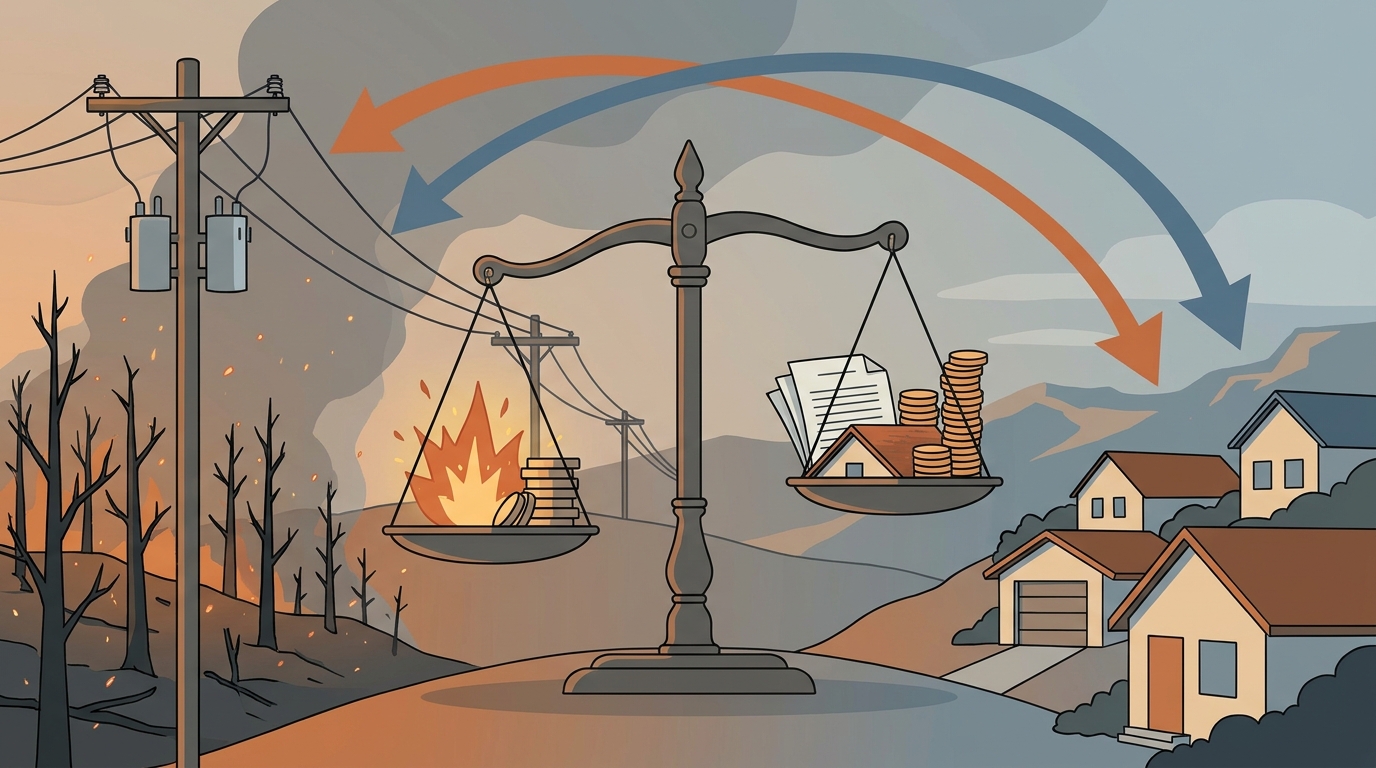
California lawmakers heard competing estimates Thursday on how changing insurer subrogation rights after utility-caused wildfires could shift costs between homeowners, utilities and electricity customers, but the committees took no formal action.
At a joint informational hearing of the Assembly committees on Utilities and Energy and Insurance, actuary Nancy Watkins presented modeling prepared for the California Natural Resources Agency and the Governor’s Office. Watkins said she was speaking in her personal capacity and that the analysis examined three scenarios: eliminating subrogation, capping recoveries at 50% and maintaining the current system.
Under the analysis’s medium scenario, eliminating utility subrogation would require an estimated 10% to 11% increase in total statewide homeowners insurance premiums, Watkins said. The effect would be concentrated in wildfire coverage: policies with little wildfire exposure could see little or no change, while the wildfire portion of premiums in higher-risk areas could rise by roughly 30% to 40%.
The modeled effect of a 50% cap varied with the assumptions. Watkins said the cap would have no statewide premium effect in the low scenario, about a 1% effect in the medium scenario and about a 6% effect in the high scenario. She cautioned that the estimates are statewide averages and that individual insurers and policyholders could experience different results.
The hearing also presented an estimate from the Wildfire Fund Administrator that eliminating subrogation could reduce utility settlement costs by roughly 35% to 40%. Stanford researcher Michael Wara said the effect on utility customers would depend on factors including the Wildfire Fund’s capacity, utility solvency, bankruptcy priorities and future decisions about how wildfire costs are shared. He emphasized that eliminating subrogation would more likely avoid or reduce future liability than automatically lower utility bills.
Lawmakers pressed witnesses for data on whether subrogation investigations improve utility safety, as well as information about legal, investigative and other transaction costs. Watkins said publicly available fire-specific settlement data is limited. The hearing record did not resolve those questions, and it included no bill, committee recommendation or vote changing California’s subrogation rules.