California’s math performance has improved since the pandemic-era drop, but lawmakers and education researchers told an Assembly committee that the recovery remains slow and uneven — and that persistent gaps are tied to teacher preparation, district capacity and inconsistent curriculum implementation.
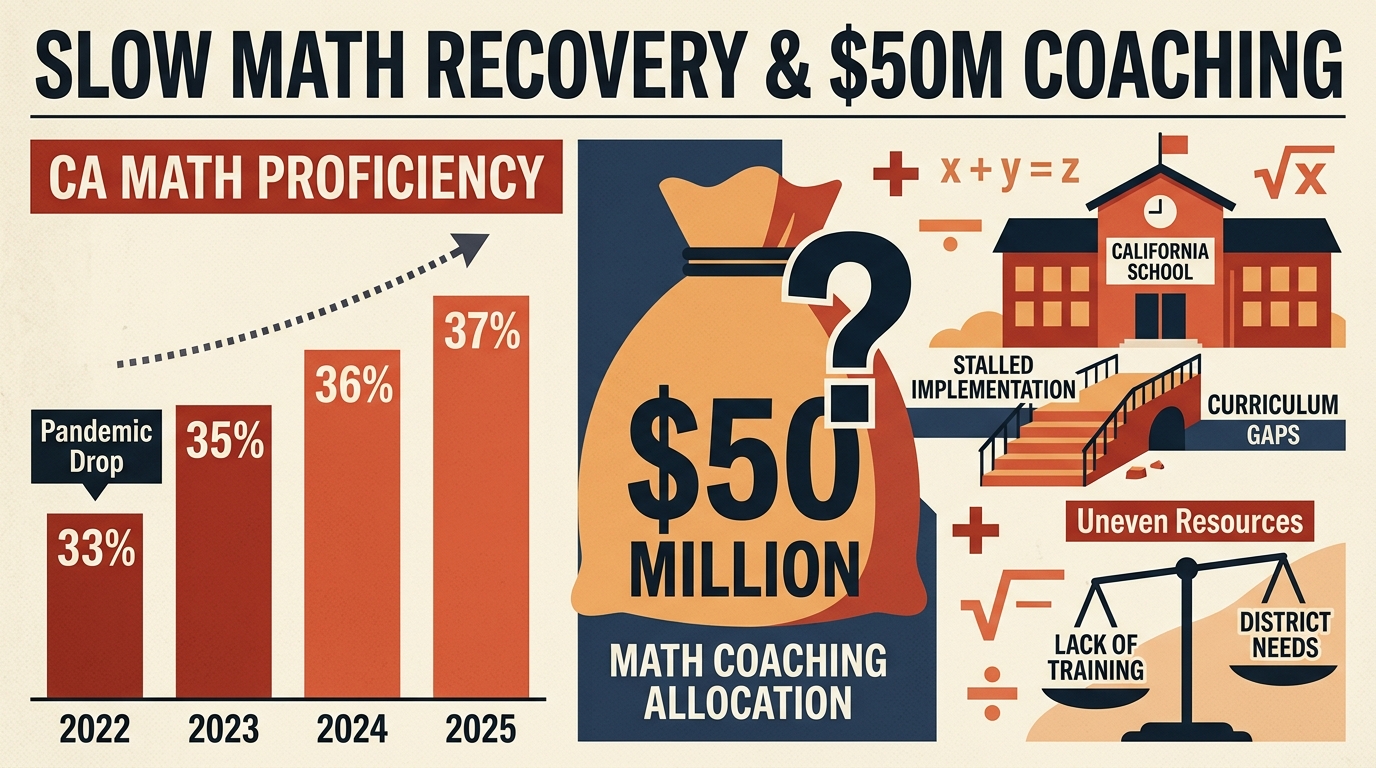
At an Oct. 13 information hearing of the Assembly Education Committee, testimony described statewide math proficiency falling seven percentage points to 33% in 2022. It rose two points in 2023 and one point in each of the next two years, according to figures presented during the hearing, leaving fewer than half of California students meeting math standards.
The disparities were sharper for some student groups. The hearing record reported that about 20% of Black students, 23% of Native American students and 26% of Latino students met or exceeded math standards in 2025, compared with roughly half of white students and two-thirds of Asian students. Proficiency was reported at 26% for low-income students, compared with 58% for moderate- and higher-income students.
Witnesses also said staffing and professional support remain uneven. About 77% of California math classes were described as being taught by fully credentialed teachers, with lower rates in schools serving larger shares of low-income students. Testimony called for stronger math content and pedagogy in teacher-preparation programs, expanded teacher-residency pathways and sustained coaching paired with interventions that track student mastery.
The committee heard that the state’s 2023 Mathematics Framework has not been easy for districts to implement. Witnesses cited the number of approved instructional materials, limited local capacity and the lack of a fully revised middle- and high-school math sequence as barriers. Recommendations included clearer state guidance, stronger alignment from transitional kindergarten through third grade and a more coherent sequence connecting algebra, geometry and advanced mathematics.
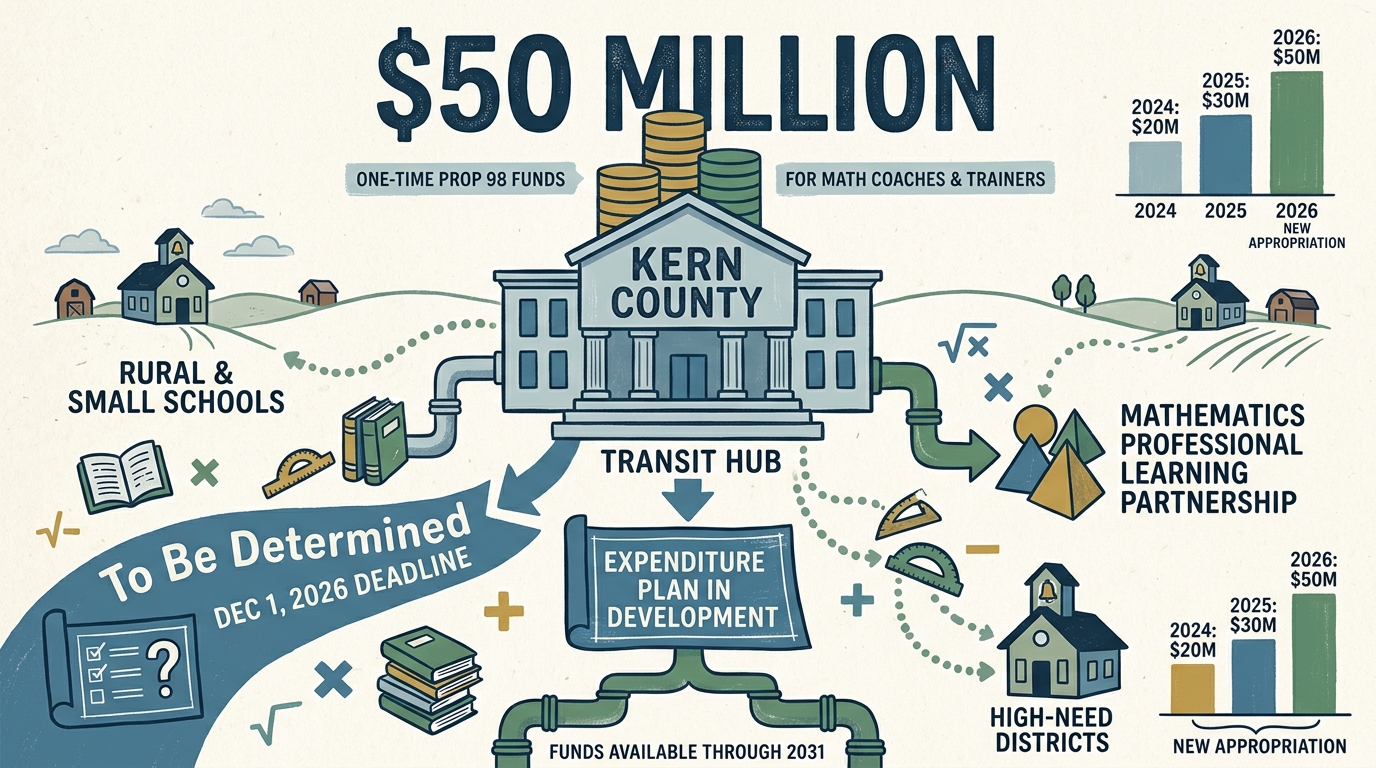
The committee chair also cited a current $50 million state budget allocation for math coaches, with particular relevance to small and rural districts. The hearing did not establish how the money will be distributed, which districts will receive it, when implementation will begin or what measures will be used to assess its effect. No vote was reported.
Those details are likely to determine whether the allocation becomes more than a budget figure. The hearing documented the need for coaching and other supports, but it did not provide evidence that the $50 million investment has yet improved student outcomes. The state Department of Education’s eventual guidance, grant awards and performance measures will be key follow-up points.